

Chemical-resistant wheels
Which tread and bracket materials best withstand oils, detergents and aggressive agents, and in which applications they are worth using.
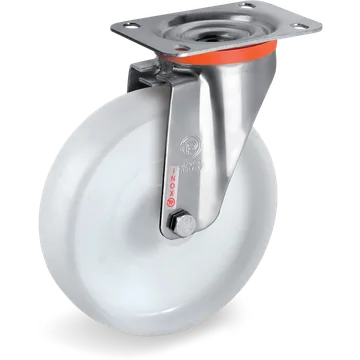
In the food, pharmaceutical and chemical industries, or in any facility with frequent washdowns, wheels work in contact with oils, greases, detergents and disinfectants. With the wrong material, the tread swells, cracks or loses grip within a few weeks.
The tread
- Polyamide 6: very good resistance to oils, greases and most solvents. Low rolling resistance on smooth floors, although it is noisier and gives the floor less protection.
- Tellure polyurethanes (TR, TR-Roll, TR-PowerHigh): good behaviour against oils and greases and excellent wear resistance. Prolonged exposure to strong acids and hot pressurised water is best avoided.
- Thermoplastic polyurethane: a balanced option for catering and kitchens, quiet and non-marking.
- Rubber: the most sensitive to oils and hydrocarbons. If there is frequent contact with them, choose another material.
The bracket and bearings
In damp environments or with washdowns, the weak point is usually the bracket rather than the tread. Wheels with a stainless steel bracket and stainless bearings prevent corrosion and rust residue, which is essential in food and pharmaceuticals.
In our finder you can filter by Bracket material → Stainless steel and by bearing type.
Not sure?
Tell us which chemicals are present in your facility, the temperature and how often you clean. With that information we will recommend the right combination of tread, centre and bracket. Write to us.