
How to measure an industrial wheel to order a replacement
Which measurements to take from the wheel and the bracket (diameter, width, axle, plate and height) to find the exact reference or its equivalent.
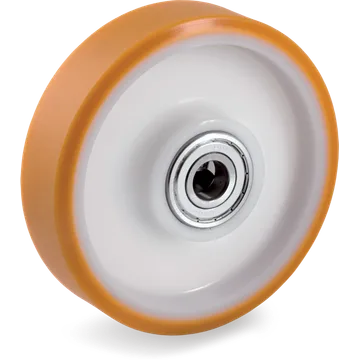
When a wheel breaks, the quickest fix is to order the same one. If you have the Tellure Rôta code (on the delivery note, the invoice or the box label), look it up in the wheel finder and you are done. If you do not, a tape measure, a calliper and five minutes are enough to take the measurements we need to give you the exact reference or an equivalent.
1. Outside diameter
Measure the wheel from edge to edge through the centre of the axle. A worn wheel will measure a little less than its nominal size: round up to the nearest standard size. The most common are 80, 100, 125, 150, 160, 200 and 250 mm.
2. Tread width
This is the width of the part that touches the floor. Together with the diameter, it is the first thing we look at: in the finder you can type the size as it is, for example 125x50.
3. The axle: bore and hub
If you are only replacing the wheel and keeping the bracket, this is the most important measurement:
- Bore diameter, the hole the axle goes through (for example 12, 15, 20 or 25 mm). Measure it with the calliper, or measure the axle.
- Hub length: the width of the central part of the wheel that the axle passes through. It is often wider than the tread, and it is what has to fit between the arms of the fork.
- Bearing type: ball bearings, roller bearing or plain bore (no bearing). If you are not sure, a photo of the wheel from the side is enough for us.
4. If it is a castor (wheel with bracket)
As well as the wheel, measure the bracket:
- Overall height: from the floor to the top of the plate. If the new one is taller or shorter, the equipment will lean or be unbalanced.
- Top plate fixing: length and width of the plate, distance between the centres of the holes (in both directions) and hole diameter. This is the measurement that causes the most mistakes: do not measure between edges.
- Stem fixing: diameter and length of the stem and, if it is threaded, the thread size (M10, M12…).
- Bolt hole fixing: diameter of the central hole.
- Swivel or fixed, and whether it has a brake and of what type.
5. Load and use
Tell us how much the equipment weighs with its maximum load, how many wheels it has and what floor it runs on. If the wheel broke early, the original may have been undersized: with these details we will suggest the same one or a better one. The guide to choosing wheels explains how to work out the load per wheel.
Compare with the drawing before ordering
Every item in the finder has its dimensioned drawing, and almost all of them have a technical data sheet in PDF. Filter by diameter (for example, 125 mm wheels), material and bracket type, and compare the dimensions on the drawing with yours.
Send us photos if in doubt
One photo from the front and another from the side, with a tape measure next to the wheel, settle almost every doubt. Send them on WhatsApp or to [email protected] together with the measurements. And if you need to replace many, upload your list of codes and quantities in Excel or CSV to the quote cart and we will send you the complete offer.